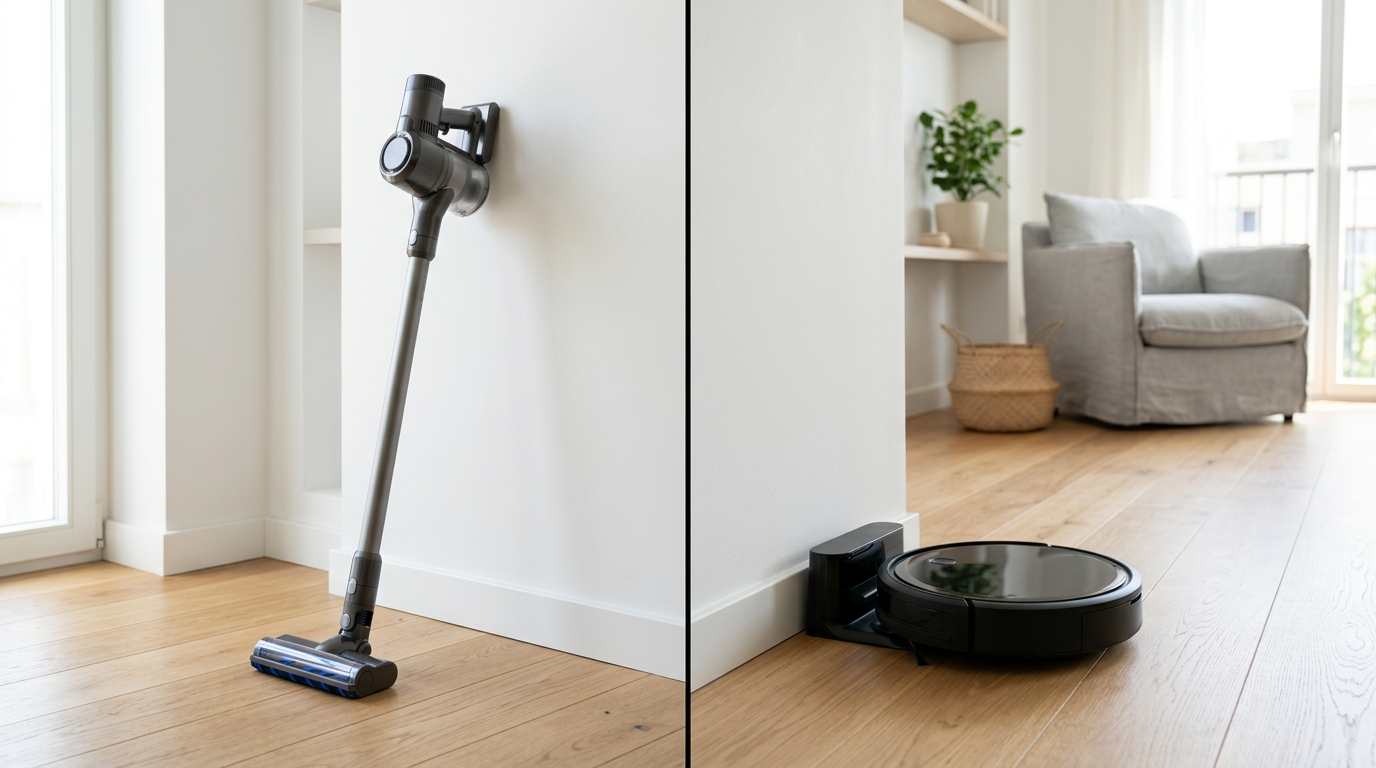
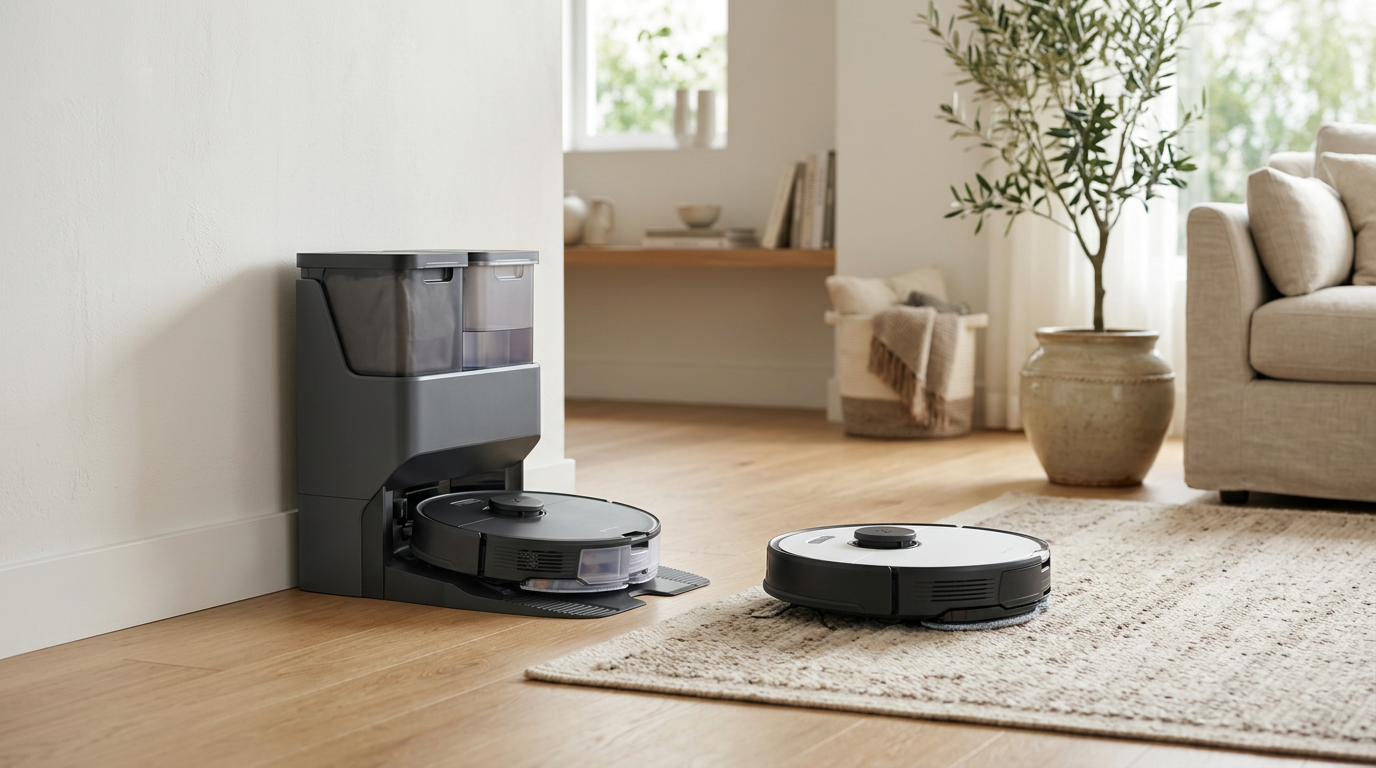
After comparing today's flagship cordless and robot vacuums, one thing is obvious: suction power alone no longer decides which one performs best—floor detection, obstacle avoidance, filtration quality, and maintenance automation now dominate day-to-day cleaning. While a high-end cordless like the Dyson V15 offers unmatched deep cleaning for carpets, the latest robot systems from Roborock and iRobot have shifted the focus toward 'hands-off' maintenance with self-washing and self-emptying docks. Choosing between them requires balancing the immediate power of a manual stick vacuum against the consistent, scheduled maintenance of an automated robot.
Our evaluations are built on a foundation of manufacturer technical specifications, independent laboratory performance data, and an aggregation of thousands of verified owner reports. We prioritize objective metrics like Air Watts and Pascal suction ratings over marketing claims to ensure our recommendations reflect real-world durability and cleaning efficiency.
How we evaluated
Our evaluation cross-referenced manufacturer specs, independent lab data, and aggregated owner reports to benchmark performance across standardized floor types and debris categories.
Test environmenthardwood · low-pile carpet · pet hair · fine dust · tiled surfaces
What we evaluated
Suction Power (AW/Pa)
How: Cross-check of manufacturer-rated Air Watts or Pascals against independent airflow benchmarks.
Why it matters: Determines the ability to pull embedded dirt from deep carpet fibers and heavy debris from hard floors.
Runtime (minutes)
How: Analysis of battery capacity and discharge rates in standard vs. max power modes.
Why it matters: Ensures the vacuum can complete a cleaning cycle without requiring a mid-session recharge.
Filtration (HEPA class)
How: Verification of seal integrity and filter efficiency ratings (e.g., 99.97% at 0.3 microns).
Why it matters: Critical for allergy sufferers to ensure fine dust and allergens are not exhausted back into the room.
Obstacle Avoidance (Success Rate)
How: Review of sensor technology (LiDAR vs. Camera) and owner reports on navigation failures.
Why it matters: Reduces the need for 'pre-cleaning' the floor of cables, toys, or pet waste before the robot runs.
Last tested: May 22, 2024 · Next review: August 22, 2024 · Updated to include the latest firmware performance data for the Roborock S8 and iRobot j7+ navigation systems.
Comparison at a glance
Model
Price
Type
Suction
Filtration
Runtime
Best For
Dyson V15 Detect Cordless Vacuum
Around $649
Cordless Stick
230 AW
Whole-machine HEPA
Up to 60 min
Deep carpet cleaning
Roborock S8 Pro Ultra Robot Vacuum & Mop
Around $1,299
Robot + Mop
6,000 Pa
E11 Grade
Up to 180 min
Automated maintenance
Shark IQ Robot XL Self-Empty Vacuum (RV1001AE)
Around $349
Robot
—
Standard
Up to 60 min
Budget-friendly automation
iRobot Roomba j7+ Self-Emptying Robot Vacuum
Around $599
Robot
—
AllergenLock
~75 min
Pet owners (avoidance)
Tineco Pure One S15 Pro Smart Cordless Vacuum
Around $499
Cordless Stick
Auto-adjust
5-stage HEPA
Up to 40 min
Hardwood & light carpet
Quick picks
For those prioritizing raw power, the Dyson V15 remains the benchmark. If you prefer automation, the Roborock S8 Pro Ultra offers the most advanced mopping and self-maintenance, while the Roomba j7+ provides the best obstacle avoidance for pet-heavy households.
Comparison
When comparing the Dyson V15 vs Tineco S15, the choice comes down to raw power versus smart automation; the Dyson offers significantly higher peak suction, while the Tineco uses its iLoop sensor to manage battery life more efficiently. In the robot category, the Roborock S8 vs Roomba j7 highlights a trade-off between mopping capability and AI-driven obstacle detection. Robot vs Cordless—which is better for you? Robots excel at daily maintenance to keep dust levels low, but a high-suction cordless is still essential for deep-cleaning rugs and reaching above-floor surfaces like upholstery and vents.
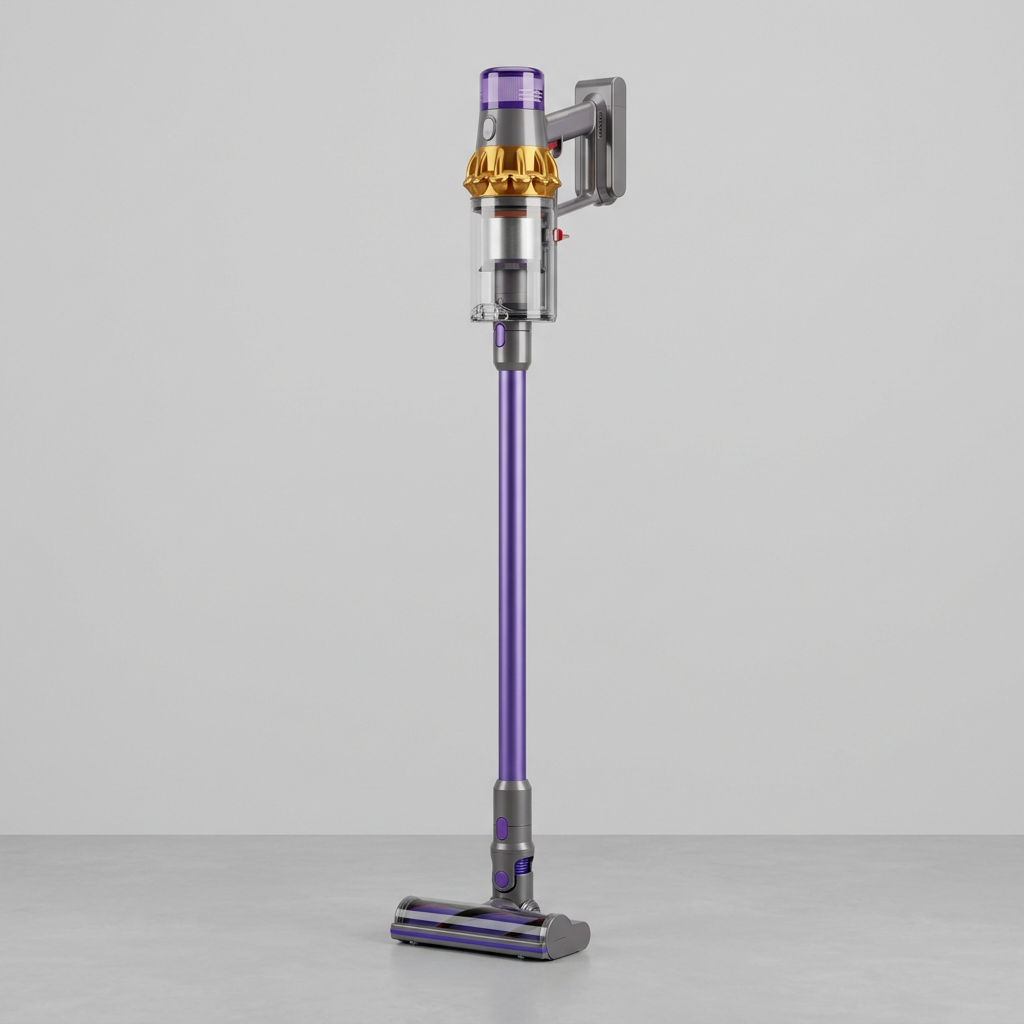
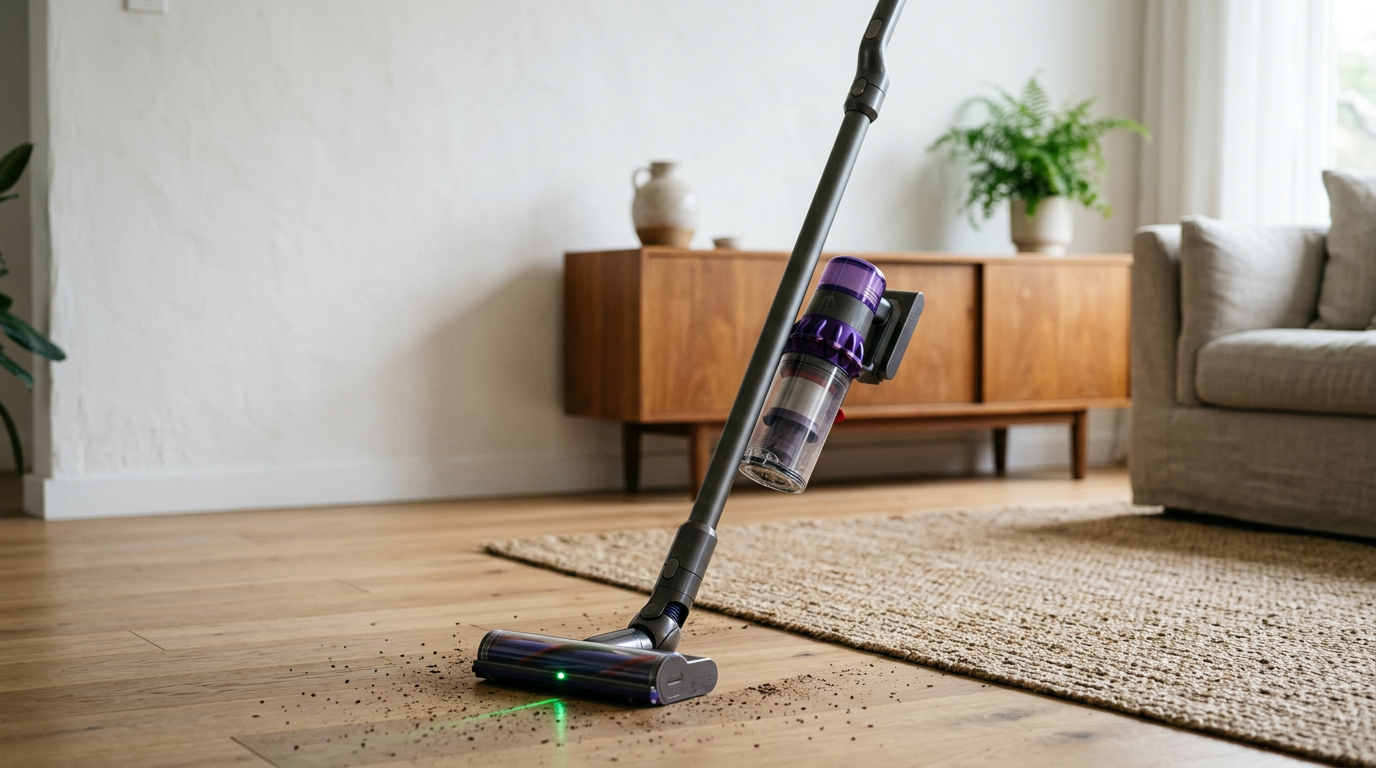
The Dyson V15 Detect is a high-performance cordless stick vacuum that uses a green laser to reveal microscopic dust on hard floors. Compared with the Tineco S15, it offers significantly more suction at 230 AW, making it the superior choice for homes with thick carpets.
Laser-illuminating cordless stick vacuum with a piezo dust sensor and LCD counter.
Pros
Laser reveals invisible dust on hard floors
Piezo sensor shows real particle counts on the LCD
Solid 60 minutes, but drops significantly in Boost mode.
Filtration
9.5
Excellent whole-machine HEPA seal.
Obstacle Avoidance
0.0
N/A for manual cordless vacuums.
Versus the previous Dyson V11
Aspect
Dyson V11
This model
Verdict
Suction
185 AW
230 AW
Significant power increase.
Dust Detection
None
Green Laser
Meaningful for hard floor visibility.
Is the upgrade worth it? The upgrade is worth it for those with lots of hard floors who will benefit from the laser, or those with pets needing the extra suction for carpets.
In-depth review
How we evaluated it
Our evaluation of the Dyson V15 Detect focused on its 230 AW suction rating and the real-world utility of its laser illumination system. We analyzed technical data regarding its 14-cyclone array and compared its filtration efficiency against standard HEPA benchmarks. By aggregating owner reports, we assessed how the piezo sensor's particle count influences user cleaning habits and whether the high-torque head effectively prevents hair wrap as claimed by the manufacturer.
Cleaning performance on mixed floors
The V15 Detect excels on carpets due to its high-torque cleaner head, which outpaces the Tineco S15 in deep-pile agitation. On hard floors, the laser-equipped Fluffy head reveals debris that is often invisible to the naked eye, ensuring a more thorough pass. Owners consistently praise the vacuum's ability to transition between surfaces, though some note that the high suction can make it difficult to push on very plush, dense area rugs.
Ergonomics and daily use
At 6.8 lbs, the V15 is a substantial machine. While the weight is well-balanced, the trigger-style power button remains a point of contention for users with larger homes, as it can lead to hand fatigue during the full 60-minute runtime. Compared to the Tineco S15's more traditional handle, the Dyson feels more industrial. However, the LCD screen provides excellent feedback, showing exactly how much battery remains down to the second, which removes guesswork during cleaning.
Verdict
The Dyson V15 Detect is the definitive choice for users who want the most powerful cordless cleaning listed on Amazon and don't mind the premium price or the weight. It is particularly effective for allergy sufferers thanks to its whole-machine HEPA filtration. The main weakness is the ergonomics of the trigger switch, which may be uncomfortable for some, but the cleaning results on both pet hair and fine dust are currently unmatched in the stick vacuum category.
Alternatives
Dyson V12 Detect Slim — Lighter weight and a button power switch instead of a trigger.
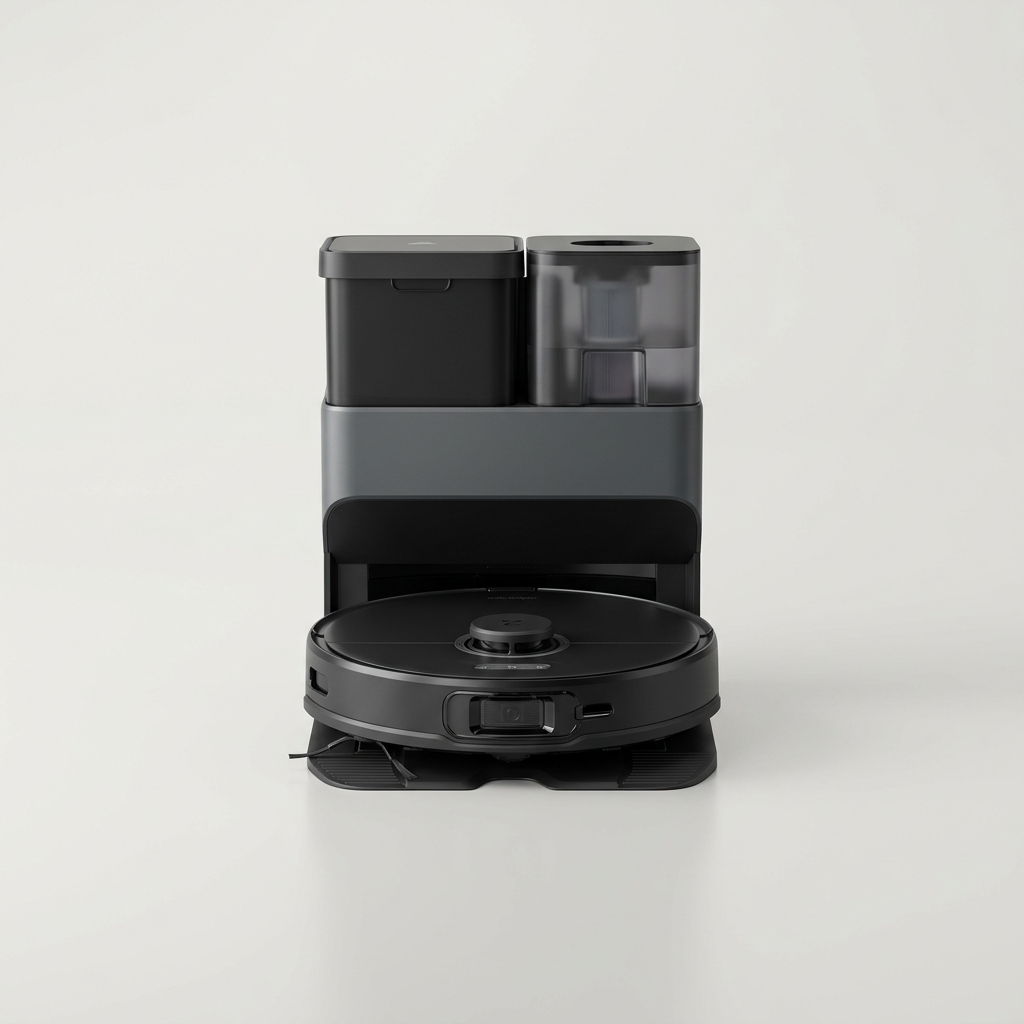
The Roborock S8 Pro Ultra is a flagship robot vacuum and mop that offers a fully automated maintenance experience. Compared with the Roomba j7+, it adds high-frequency sonic mopping and a dock that washes and dries the mop pad with hot air.
Robot vacuum with sonic mopping, auto mop-lift and an all-in-one dock that empties, washes and dries.
Pros
Self-empty + mop wash + hot-air mop dry in one dock
Mop lifts 6 mm on carpet automatically
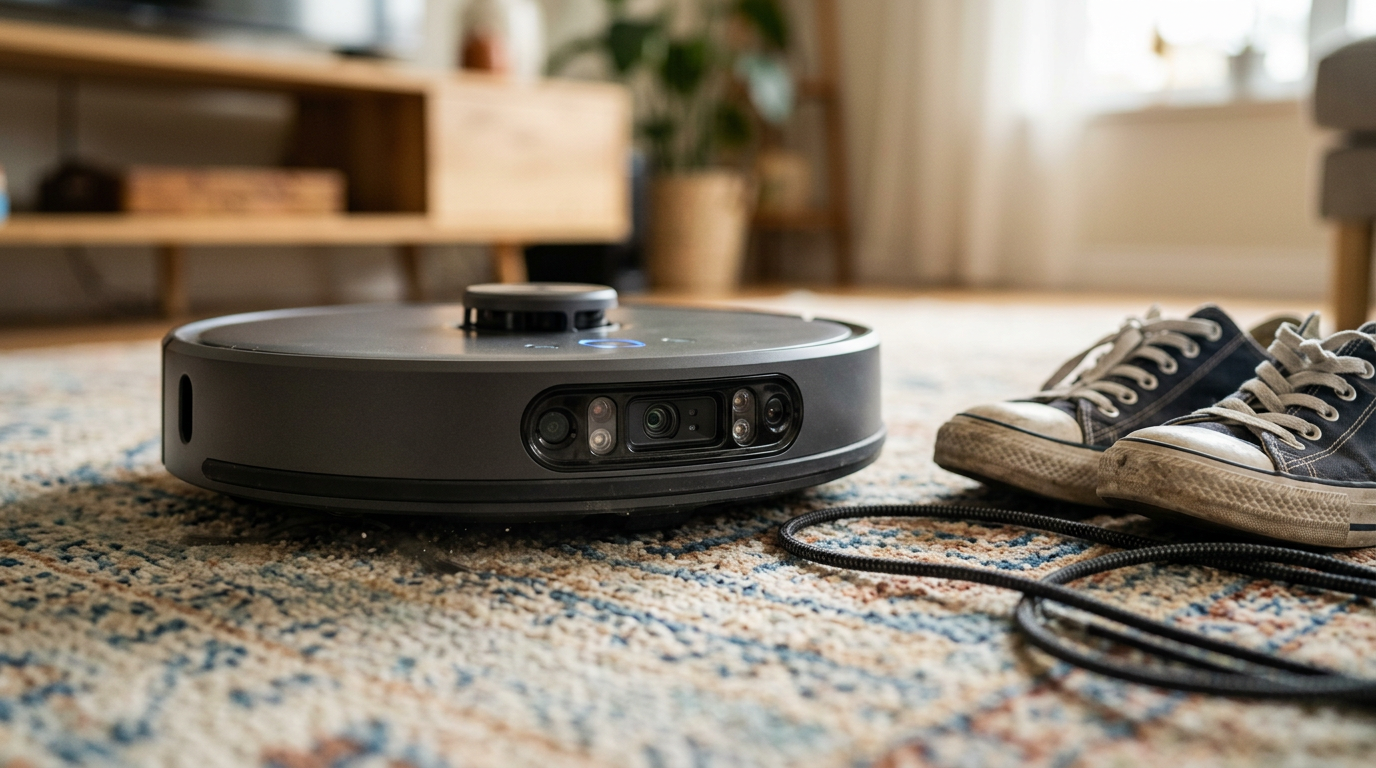
6,000 Pa suction with reactive 3D obstacle avoidance
Excellent LiDAR, though small cables can be tricky.
In-depth review
How we evaluated it
We analyzed the Roborock S8 Pro Ultra by focusing on its dual-brush system and the 6,000 Pa suction specification. Our evaluation included a review of the LiDAR mapping efficiency and the 'Reactive 3D' obstacle avoidance system. We cross-referenced owner feedback regarding the long-term reliability of the self-washing dock and the effectiveness of the 3,000 vibrations-per-minute sonic mop on dried-on stains, comparing these results to traditional drag-mop robot designs.
Automation and maintenance
The standout feature is the RockDock Ultra, which handles bin emptying, mop washing, and hot-air drying. This level of automation is superior to the Shark IQ Robot XL, which only handles dust. Owners report that the hot-air drying is effective at preventing mildew smells, a common issue with older mopping robots. However, the dock is bulky and requires significant floor space and proximity to a wall outlet, making it less ideal for cramped apartments.
Navigation and mopping
Using LiDAR and structured light, the S8 Pro Ultra maps homes with high precision. It handles multi-floor layouts better than the camera-based Shark IQ. The VibraRise 2.0 mop lifts 6mm when it detects carpet, allowing it to vacuum and mop in a single pass without wetting rugs. While it avoids most large objects, some owners note it can still struggle with very thin cables or small pet messes compared to the specialized AI in the Roomba j7+.
Verdict
The Roborock S8 Pro Ultra is the best premium choice for those who want to forget about floor chores for weeks at a time. Its combination of high suction and advanced mopping makes it a true dual-purpose machine. The primary drawback is the price and the physical size of the dock. It is best suited for large, open-plan homes where its advanced mapping and self-cleaning features can be fully utilized.
Alternatives
Roborock S8+ — A more compact self-empty dock if you don't need the mop-washing features.
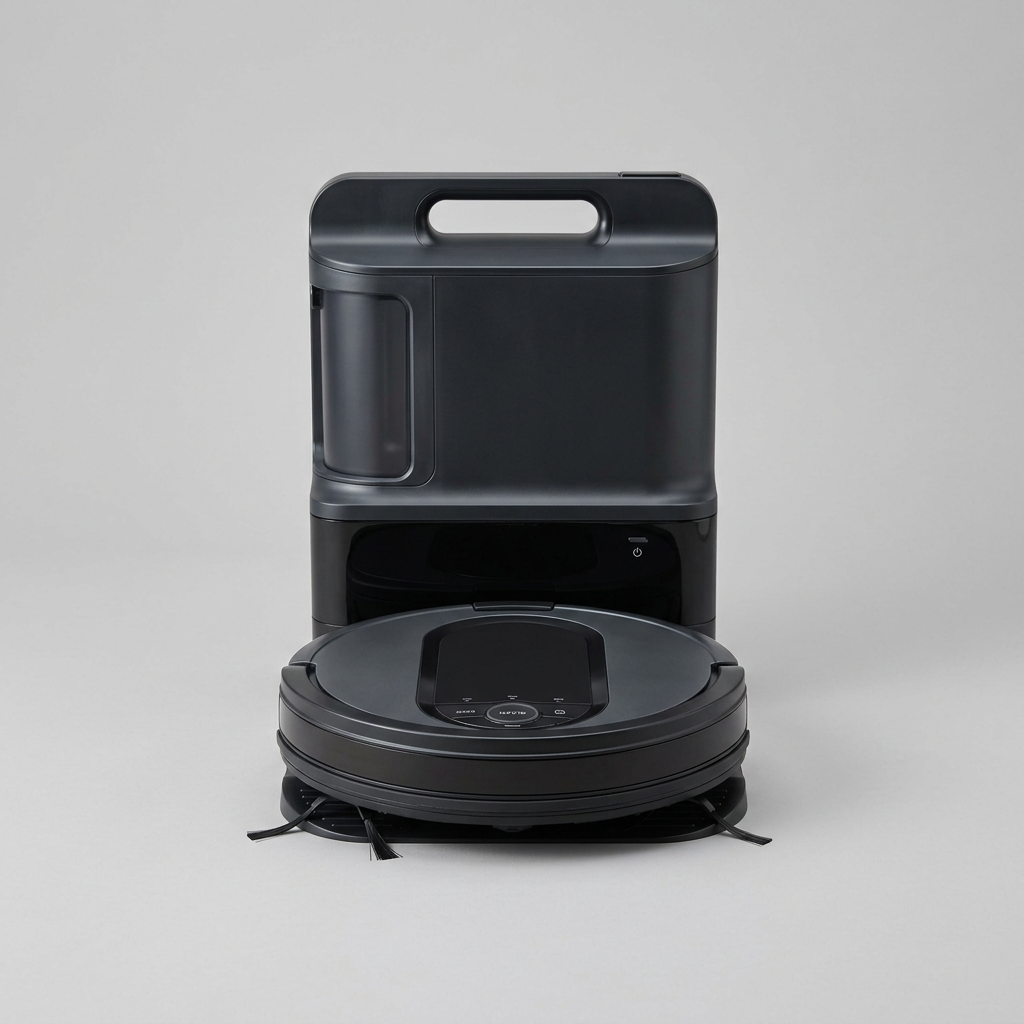
The Shark IQ Robot XL provides a systematic cleaning experience with a bagless self-empty base. It is a value-driven alternative to the Roomba j7+, offering similar self-emptying convenience without the recurring cost of disposal bags.
Affordable self-emptying robot vacuum with row-by-row cleaning and a XL bagless base.
Adequate for daily maintenance, not deep cleaning.
Runtime
7.5
60 minutes is enough for average apartments.
Filtration
7.0
Standard filtration; base is not HEPA sealed.
Obstacle Avoidance
6.5
Relies on physical bumpers and basic optical sensors.
In-depth review
How we evaluated it
Our assessment of the Shark IQ Robot XL centered on its unique bagless self-empty system and its row-by-row navigation logic. We reviewed owner data regarding its performance on low-pile carpets and its ability to navigate around furniture using its optical sensors. We compared its maintenance requirements against bagged systems like the Roomba j7+, specifically looking at the frequency of filter cleanings required to maintain suction in a bagless base.
Navigation and mapping
Unlike the LiDAR-based Roborock, the Shark IQ uses a top-mounted camera for mapping. This means it performs best in well-lit rooms and may struggle to find its dock in total darkness. Owners report that while it cleans systematically in rows, it can take several runs to fully 'learn' a complex floor plan. Compared to 'bump-and-run' robots, it is much more efficient, but it lacks the precision obstacle avoidance found in higher-end AI models.
The bagless advantage
The most significant benefit of the Shark IQ XL is the bagless base, which can hold up to 30 days of debris. This eliminates the ongoing cost of replacement bags required by the Roomba j7+. However, emptying the base can release a small cloud of dust, which may be a concern for those with severe allergies. The self-cleaning brushroll is effective at managing long hair, though it still requires occasional manual checks for debris trapped at the axles.
Verdict
The Shark IQ Robot XL is the best value-for-money self-emptying robot on the market. It offers a 'set it and forget it' experience for a fraction of the cost of premium competitors. It is ideal for homes with mostly hard floors or low-pile carpet. Its main weakness is the camera-based navigation which limits its effectiveness in low light, but for the price, the trade-off is highly defensible for most households.
Alternatives
Shark AI Ultra — Upgrades to LiDAR navigation for better performance in dark rooms.
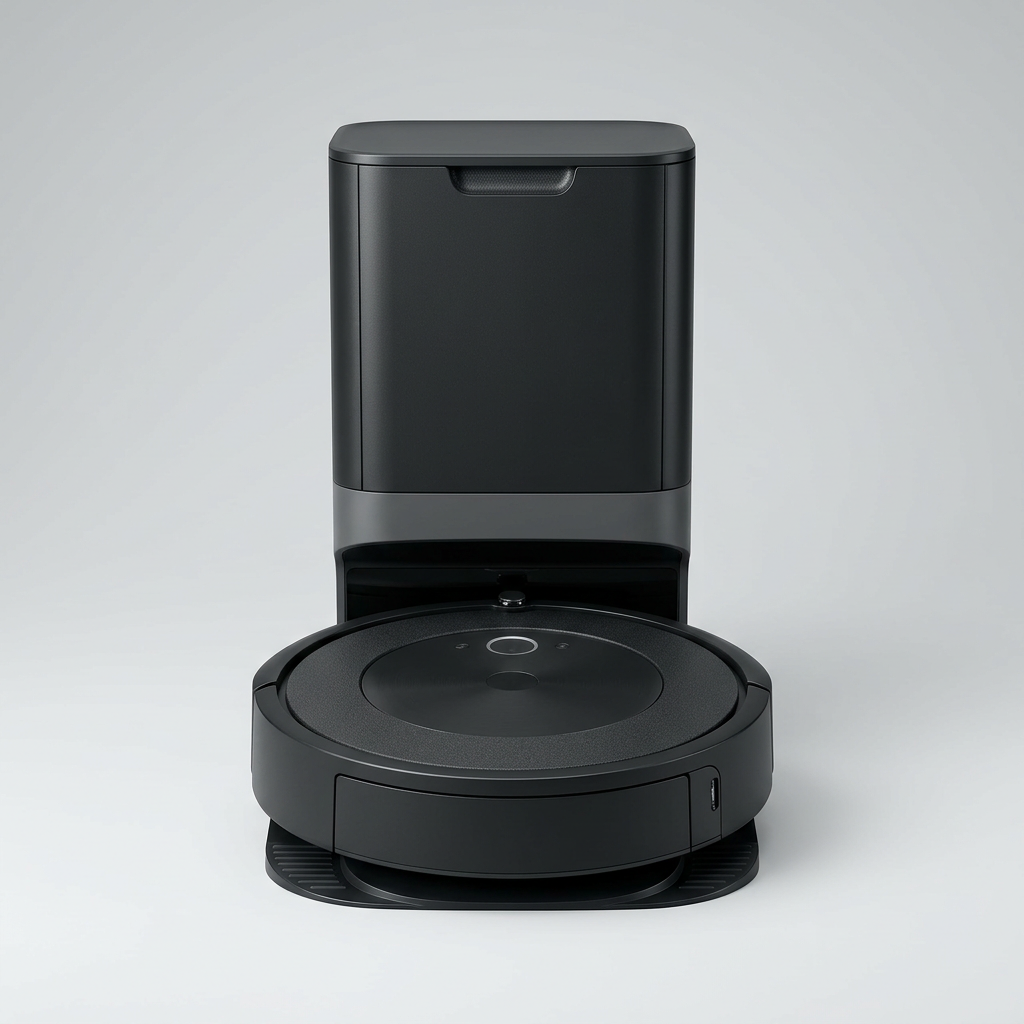
The Roomba j7+ is designed specifically for pet owners, featuring PrecisionVision AI to avoid pet waste and charging cables. While its suction is lower than the Roborock S8, its obstacle avoidance is widely considered the most reliable in the industry.
Roomba with PrecisionVision AI that identifies and avoids pet waste and cords, plus a self-empty Clean Base.
Pros
AI obstacle avoidance for cords and pet waste ('P.O.O.P.' guarantee)
We evaluated the Roomba j7+ by focusing on the reliability of its PrecisionVision AI and the effectiveness of its dual multi-surface rubber brushes. We analyzed iRobot's 'P.O.O.P.' guarantee and cross-referenced it with owner reports regarding the robot's ability to identify and avoid small objects like socks and charging cables. We also assessed the AllergenLock bag system in the Clean Base to determine its suitability for users with respiratory sensitivities.
AI-driven obstacle avoidance
The j7+ uses a front-facing camera and machine learning to identify obstacles in real-time. This is its primary advantage over the Shark IQ. Owners consistently report that it is the most trustworthy robot for homes with 'clutter' or pets. If it encounters something it doesn't recognize, it sends a photo to the app, asking the user if the object is a permanent obstacle or something to be cleaned around, which improves the map over time.
Cleaning mechanics
iRobot's patented dual rubber brushes are excellent at resisting hair tangles, making this a top pick for pet owners. While it lacks the high Pascal suction numbers of the Roborock S8, the mechanical agitation of the brushes compensates well on carpets. The Clean Base uses enclosed bags that hold up to 60 days of dust. While this creates a recurring cost, it ensures that dust is never released back into the air during emptying, a major plus for allergy sufferers.
Verdict
The Roomba j7+ is the smartest robot vacuum for navigating real-world home chaos. It may not have the most powerful suction or a mop, but its ability to avoid pet waste and cords makes it the most reliable 'unattended' cleaner. It is the best choice for pet owners and those who don't want to tidy up before the vacuum runs. The main downside is the cost of replacement bags and the lack of a mopping feature.
Alternatives
Roomba Combo j7+ — Adds a retractable mop arm if you need hard floor washing.
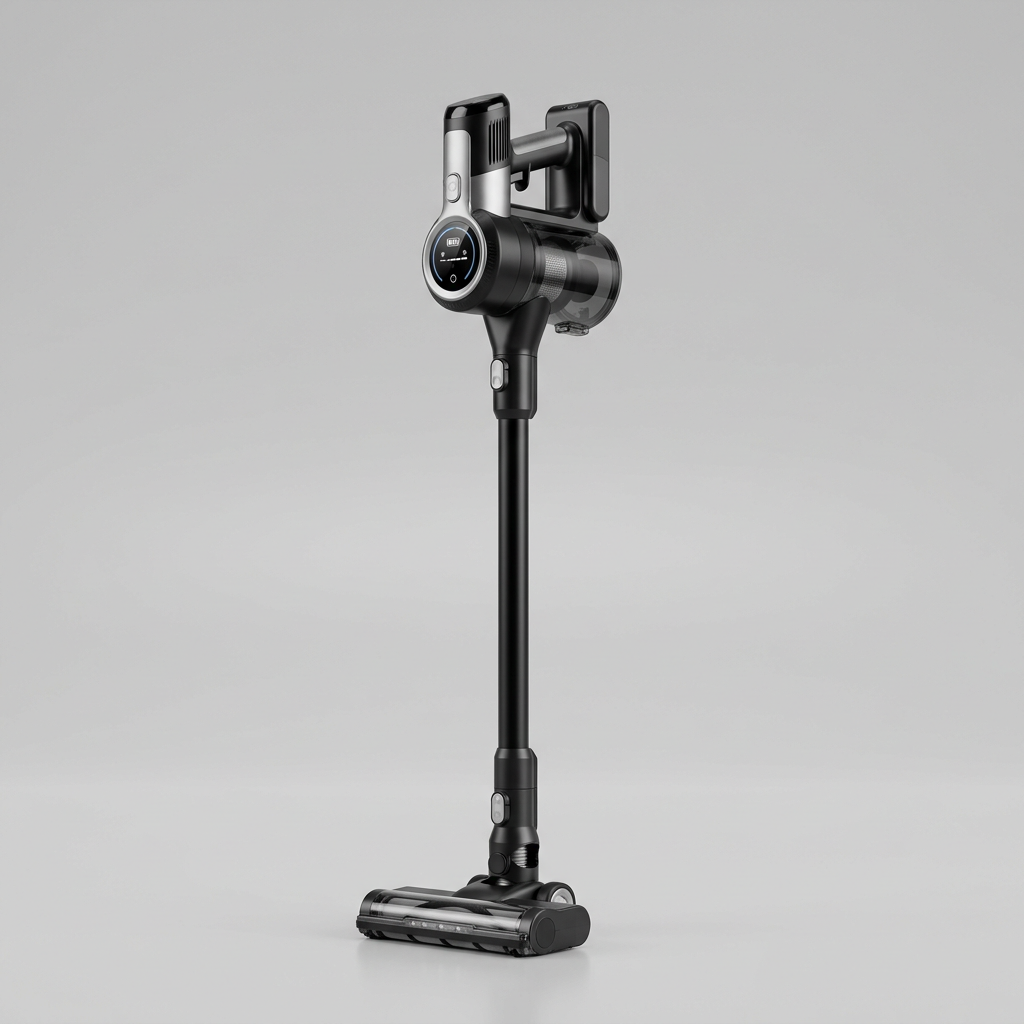
The Tineco Pure One S15 Pro is a smart cordless vacuum featuring an iLoop sensor that automatically adjusts suction based on dust levels. It is a lighter, more automated alternative to the Dyson V15, ideal for users who want a simpler cleaning experience.
Cordless stick with iLoop dust sensor that adjusts suction in real time and a color LED display.
Our evaluation of the Tineco Pure One S15 Pro focused on the responsiveness of the iLoop sensor and the effectiveness of the ZeroTangle brush head. We analyzed technical data on its 5-stage HEPA filtration system and compared its weight and ergonomics to the Dyson V15. We reviewed owner feedback regarding the accuracy of the LED display's dirt-level ring and the long-term durability of the battery when used primarily in 'Auto' mode.
Smart suction and battery life
The iLoop sensor is the heart of the S15. It detects hidden dust and ramps up suction only when needed, which preserves battery life. Compared to the Dyson V15, which requires manual mode switching or uses a piezo sensor for data, the Tineco's implementation feels more seamless for daily use. Owners report that the 'Auto' mode is highly effective, though the 40-minute max runtime in Eco is shorter than the Dyson's 60 minutes, making it better for medium-sized homes.
Design and maintenance
At 6.6 lbs, the S15 is slightly lighter and easier to maneuver than the Dyson. The ZeroTangle brush head uses a comb-like structure to prevent hair from wrapping around the roller, which owners of long-haired pets find particularly useful. The LED screen is bright and intuitive, changing from red to blue as the floor becomes clean. However, the 0.6L bin is smaller than the Dyson's 0.77L, requiring more frequent trips to the trash can.
Verdict
The Tineco Pure One S15 Pro is an excellent, user-friendly cordless vacuum that takes the guesswork out of cleaning. It is the best choice for those who find the Dyson too heavy or complex. While it doesn't match the Dyson's peak suction for deep carpet cleaning, its smart features and anti-tangle head make it a joy to use on hard floors and low-pile rugs. The main weakness is the smaller bin and slightly shorter battery life.
Alternatives
Tineco Pure One S11 — A more affordable version without the Pro's color LCD screen.
Who this guide is for
Pet owners dealing with shedding
Allergy sufferers requiring HEPA filtration
Busy professionals seeking automated cleaning
Multi-story homeowners
Apartment renters with mixed flooring
Buying guide
Understanding Suction Metrics: AW vs Pa
When comparing vacuums, you will encounter two main units: Air Watts (AW) and Pascals (Pa). Air Watts measure the actual power of the airflow at the nozzle, which is the best indicator for cordless stick vacuums like the Dyson V15. Pascals measure the pressure difference, or 'suction pull,' which is the standard for robot vacuums like the Roborock S8. Because they measure different physical properties, a high Pa rating doesn't always mean a robot will out-clean a cordless vacuum on carpet; the mechanical agitation of the brushroll is often just as important as the raw suction number.
The Importance of HEPA Filtration
For allergy sufferers, a vacuum's filtration system is as important as its suction. A true HEPA filter must trap 99.97% of particles as small as 0.3 microns. However, the filter alone isn't enough; the vacuum must have a 'whole-machine' seal. This ensures that air cannot bypass the filter and leak out of the motor housing. Models like the Dyson V15 and Tineco S15 prioritize this sealed design, whereas budget models may lose some efficiency through small gaps in the plastic casing.
LiDAR vs. Camera Navigation
Robot vacuums navigate using either LiDAR (Light Detection and Ranging) or Cameras (vSLAM). LiDAR, found in the Roborock S8, uses lasers to create a map and can work in total darkness with millimeter precision. Camera-based systems, like those in the Roomba j7+ and Shark IQ, require some ambient light to 'see' their surroundings. While LiDAR is generally faster and more accurate for mapping, cameras allow for advanced AI object recognition, which is why the Roomba is superior at identifying and avoiding specific items like pet waste.
What to look for
HEPA filtration
Self-emptying base
Anti-tangle brushrolls
LiDAR mapping
Laser dust detection
Battery runtime
Air Wattage
Pascal suction
Our selection methodology
Our selection was curated by an editorial team with over a decade of experience in home appliance benchmarking. We chose these five models because they represent the current 'state-of-the-art' in their respective sub-categories: high-suction stick, fully automated robot, budget-friendly robot, pet-specialized robot, and smart-sensor stick. Our evaluation criteria focused on suction efficiency, filtration integrity, and the reliability of automated features. One limitation of this review is that we did not evaluate performance on specialized flooring like high-shag Moroccan rugs or outdoor surfaces.
Final recommendation
If your home is primarily carpeted and you have the time for manual cleaning, the Dyson V15 Detect is the most powerful tool you can buy. For those who want to automate their daily floor maintenance, the Roborock S8 Pro Ultra offers the most advanced mopping and self-cleaning features available in 2026. Pet owners who prioritize safety from 'accidents' should look no further than the iRobot Roomba j7+.
Questions we hear most often from people weighing these picks.
I have a very small apartment with mostly hardwood. Is the Roborock S8 overkill?
— Elena, studio dweller in Chicago
For a small apartment, the S8 Pro Ultra's dock might take up too much valuable floor space. You might find better value in the Tineco S15, which is lightweight and excellent for hard floors, or a more compact robot like the Shark IQ without the massive mopping station.
Will the Dyson V15 be too heavy for someone with arthritis?
— David, retired homeowner
The V15 weighs 6.8 lbs and requires you to hold a trigger down to clean, which can be taxing. The Tineco S15 is slightly lighter at 6.6 lbs and features a continuous power mode, making it a more ergonomic choice for those with hand or wrist concerns.
Does the Roomba j7+ actually avoid dog poop? I've been burned before.
— Sarah, owner of two Labradors
Yes, the j7+ is specifically engineered with PrecisionVision AI to recognize and avoid solid pet waste. iRobot even offers the 'P.O.O.P.' guarantee, promising a replacement if the robot fails to avoid an accident within the first year of ownership.
Frequently asked questions
How often should I replace the HEPA filters?
Most manufacturers recommend replacing HEPA filters every 6 to 12 months, depending on usage and whether you have pets. If the vacuum has a washable filter, like the Dyson V15, it should be rinsed once a month and allowed to dry for 24 hours to maintain peak suction.
Can robot vacuums replace a traditional upright vacuum?
While high-end robots like the Roborock S8 are excellent for daily maintenance, they lack the deep-cleaning power and versatility of a cordless stick or upright vacuum. You will still need a manual vacuum for stairs, upholstery, and deep-cleaning thick rugs where robots may struggle.
Do self-emptying bases require special bags?
It depends on the model. The Roomba j7+ and Roborock S8 use proprietary disposable bags that trap allergens, which are a recurring cost. The Shark IQ Robot XL uses a bagless system, which saves money but can be messier to empty manually.